Learning how to transition dog food properly is essential to avoid health issues. Changing your dog’s food might seem like a simple task, but if not done correctly, it can lead to digestive discomfort, rejection of the new food, and even impact their overall well-being. Here’s everything you need to know to ensure a safe and successful food transition.
Why It’s Important to Learn How to Transition Dog Food the Right Way
A dog’s digestive system is not built for abrupt changes. Sudden switches can cause diarrhea, vomiting, or refusal to eat the new food. That’s why all dietary changes should be GRADUAL, unless the new food must be administered exclusively and immediately (as in some veterinary-prescribed diets). Gradual changes allow the dog’s body to adapt and properly absorb nutrients.
This is especially important when the change involves:
- Texture differences, such as switching from dry to wet food or vice versa.
- Diets with very different fat and/or fiber content
Signs Your Dog Might Need a Food Change
- Frequent digestive issues (gas, soft stools, bad odor).
- Loss of appetite or refusal to eat their current food.
- Skin or coat changes (itchiness, excessive shedding, and dryness).
- Veterinary recommendation due to age, medical conditions, or specific needs.
Steps for a Successful Food Transition
Choosing the New Food
Pick a high-quality food suited to your dog’s age, size, activity level, and overall health. If you’re unsure, consult your veterinarian.
Planning the Transition Period
The transition should take 7 to 10 days to minimize risk and allow your dog’s gut microbiota to adjust to the new nutrient and ingredient profile.
Gradually Introducing the New Food
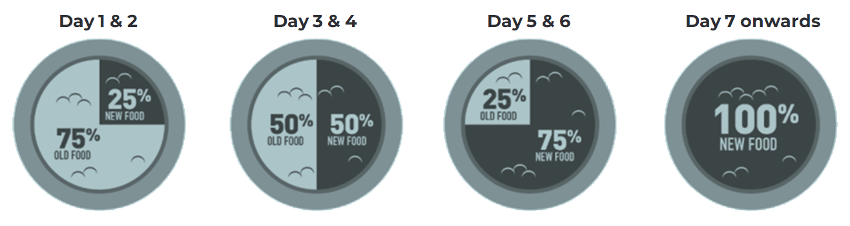
Follow this recommended guideline:
| Day | Percentage old food | Percentage new food |
| 1-2 | 75% | 25% |
| 3-4 | 50% | 50% |
| 5-6 | 25% | 75% |
| 7+ | 0% | 100% |
Monitoring Your Dog’s Response
Watch for changes in behavior, appetite, energy levels, and stool consistency. If any abnormal symptoms persist, consult your vet.
Common Issues During Food Transition and How to Handle Them
Diarrhea or Constipation
These may occur if the change was too quick or the new food isn’t suitable. Extend the transition period or temporarily return to the previous diet. Always ensure fresh, clean water is available.
Loss of Appetite
Some dogs may refuse the new food. Try warming it slightly or adding unsalted natural broth or water to improve palatability.
Vomiting or Nausea
If these symptoms persist, stop the transition and contact your vet. It may indicate intolerance or an allergy to the new food.
Tips for Maintaining a Balanced Diet After the Switch
- Choose food with a complete and balanced nutritional profile.
- Avoid frequent food changes.
- Don’t overdo treats, supplements, or table scraps (keep them under 10% of daily energy requirements).
- Monitor your dog’s weight and schedule regular veterinary checkups.
Special Cases: Food Changes for Dogs with Sensitivities
For dogs with known food allergies, intolerances, or digestive issues, opt for hypoallergenic or limited-ingredient diets. Transitions should be slower (up to 14 days) and always under veterinary supervision.
If your vet recommends an elimination diet to diagnose a food allergy, it must be followed strictly. The dog should eat only the prescribed food (no gradual transition or extras) for at least 4-8 weeks. This ensures reliable results without interference from the old diet.
Diagnosis and treatment in these cases involve identifying and eliminating the allergen from the diet. Note that partial responses can still occur if other allergies are also present.
Keys to a Successful Food Transition
- Get informed and plan ahead.
- Make the change gradually.
- Observe your dog throughout the process.
- Contact your vet if you have doubts or notice any adverse reactions.
How To Transition Dog Food? FAQs
Can I switch my dog’s food overnight?
It’s not recommended. Sudden changes can cause digestive issues. The ideal approach is a gradual transition over 7-10 days.
What should I do if my dog won’t eat the new food?
Try mixing it with unsalted natural broth or warm water to make it more appealing. If he/she still refuses it, consult your vet.
What signs indicate the new food isn’t working well for my dog?
Persistent diarrhea, vomiting, loss of appetite, or lethargy may signal food intolerance. Stop the transition and seek veterinary advice.