
There is one detail on your dog’s food label that often goes unnoticed, but it can make the difference between months of itching… or a much more comfortable life. We’ll reveal that detail later, because first you need to understand why some dogs react to certain ingredients and how to identify dog food for allergies that really works.
What is a food allergy in dogs?
A food allergy is a reaction of the immune system to a specific ingredient. It is not the same as an intolerance, which usually affects digestion, although the symptoms can be confused.
Most common symptoms
- Constant itching (paws, belly, ears).
- Recurrent ear infections.
- Hair loss.
- Digestive problems: vomiting, diarrhoea or gas.
- Skin redness.
If a dog shows several of these signs, it may be sensitive to an ingredient in its current diet. Therefore, choosing the right dry food avoids unnecessary problems.
Ingredients that commonly cause allergies
Some ingredients cause allergies more frequently than others. This is not because they are “bad”, but because the dog may have been exposed to them for a long time.
Common ingredients that can cause problems:
- Generic chicken (processed, not fresh)
- Dairy products
- Wheat and other cereals
- Eggs
- Beef
Note: the cause is not always the protein itself, but its quality and how it has been processed.
What should a good food for dogs with allergies contain?
This is where the secret we mentioned at the beginning comes in. The most common mistake is to think that simply changing the protein is enough. In reality, there are several decisive factors:
1. A single source of protein (monoprotein)
A single-protein food helps identify which ingredient is causing the reaction. It also reduces the risk of mixtures that could confuse the diagnosis.
Real example in Summit 10:
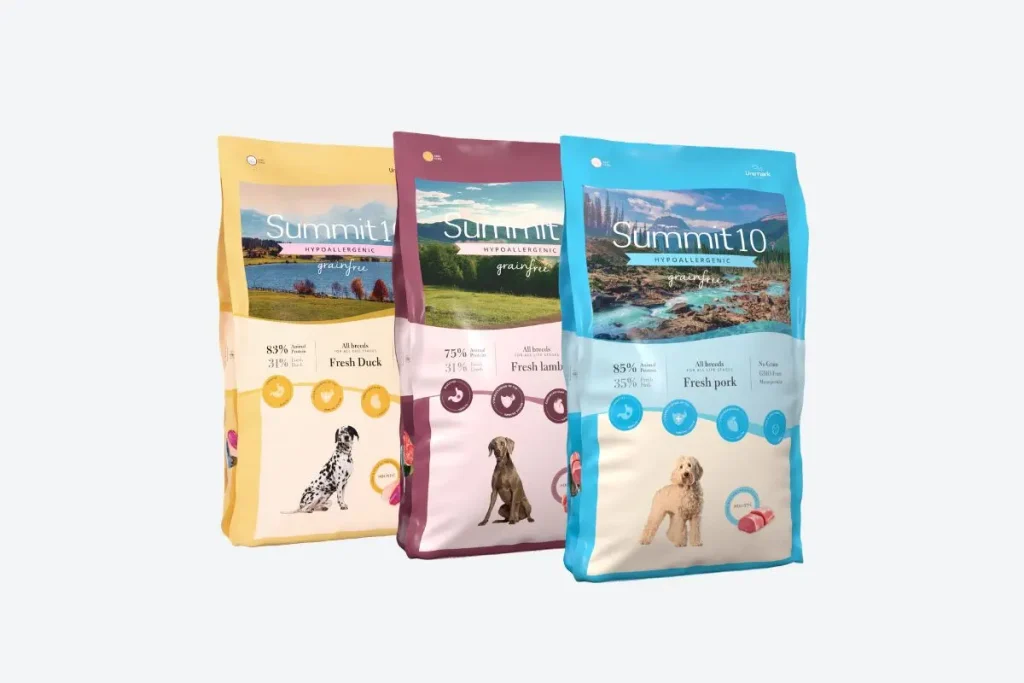
Single-protein recipes help sensitive dogs because they contain a single animal protein, such as lamb or duck, both of which are high quality and easy to digest.
2. Clearly identified ingredients
The exact origin must be specified: ‘fresh lamb meat’ is not the same as “meat” or ‘animal by-products’.
This provides transparency and avoids ingredients that may cause allergies without you knowing it.
3. Grain-free recipes or recipes without problematic grains
Grains can cause discomfort in sensitive dogs. In these cases, grain-free foods are a good option, especially if they contain safe carbohydrates such as sweet potatoes or potatoes.
4. With natural antioxidants
Avoid synthetic preservatives that can cause reactions in some dogs. It is better to look for natural tocopherols or plant extracts.
5. With prebiotics for digestion
Dogs with allergies often have a more sensitive intestinal barrier. Ingredients such as FOS or MOS help balance their intestinal flora.
How to identify the right food for the right problem
Sometimes it is not obvious what is affecting the dog. The following table can serve as a general guide:
| Main symptom | Possible cause | What to look for in food |
| Itching and ear infections | Common protein (chicken, beef) | Alternative single-protein recipe: lamb, duck, pork |
| Diarrhoea or vomiting | Poor digestion or irritating grains | Grain Free + highly digestible protein |
| Hair loss | Allergy to multiple ingredients | Simple formula, few ingredients, single protein |
| Gas or bloating | Cereal intolerance | Grain Free with sweet potato |
Advantages of choosing Summit 10 for dogs with allergies
Summit 10 recipes are developed for sensitive dogs, with special care taken in the selection of ingredients.
Reasons why they work
- High-quality single-protein sources: lamb, duck or pork.
- Fresh meat as the main ingredient, more digestible and tasty.
- Grain-free recipes for dogs intolerant to certain cereals.
- Sweet potato as a hypoallergenic and digestible carbohydrate.
- Natural antioxidants without artificial preservatives.
- Complete transparency in the list of ingredients.
How to change food without causing problems
Even if you find the perfect food, a bad change can cause symptoms that have nothing to do with allergies.
Steps for a safe change
- Days 1-2: 75% old food + 25% new food
- Days 3-4: 50% + 50%
- Days 5-6: 25% + 75%
- Day 7: 100% new food
If the dog reacts well, you can continue. If any symptoms appear, consult a vet.
When to visit the vet?
There are cases where changing food is not enough. We recommend visiting the vet when:
- Symptoms do not improve after 6-8 weeks.
- The dog shows weight loss.
- There are open wounds or recurrent infections.
- Itching affects their rest.
FAQs
How long does it take for a dog to improve with allergy food?
Normally between 4 and 8 weeks, depending on the type of allergy and the severity of the case.
Is grain-free food better for dogs with allergies?
It can be, especially in dogs with cereal intolerance. But the most important thing is that it is single-protein and high quality.
Can I mix the new food with wet food?
Yes, provided that the wet food contains the same protein and you do not introduce new ingredients that could confuse the process.
Conclusion
Choosing the right food for dogs with allergies makes a huge difference to their wellbeing. The key is to look for a single-protein recipe, with fresh meat, no problematic grains and clear ingredients. Summit10 recipes are designed to offer just that: safe, digestible food designed for sensitive dogs. A simple change can transform their quality of life. What if today is the day you start improving theirs?