Knowing how much should my dog eat is essential for maintaining their health, energy levels, and overall well-being. Just like humans, dogs have different nutritional needs depending on their age, activity level, and health status. If your dog gains or loses weight unexpectedly, shows changes in appetite, or experiences digestive issues, it might be time to reassess their diet.
In this article, we’ll explore the signs that indicate your dog’s current feeding routine might need adjustments, how to make those changes gradually, and why regular check-ins with your vet are key to ensuring a balanced and complete diet.
How Much Should My Dog Eat? Feeding Adjustments: When and How to Make Them
If your dog unexpectedly gains or loses weight (ideally every 2-4 weeks), it is time to adjust his ration. Changes should be made progressively, increasing or decreasing the amount by 10% to avoid digestive problems. The daily energy requirement of an animal varies throughout the year and throughout its life.
Signs of over- or underfeeding in dogs
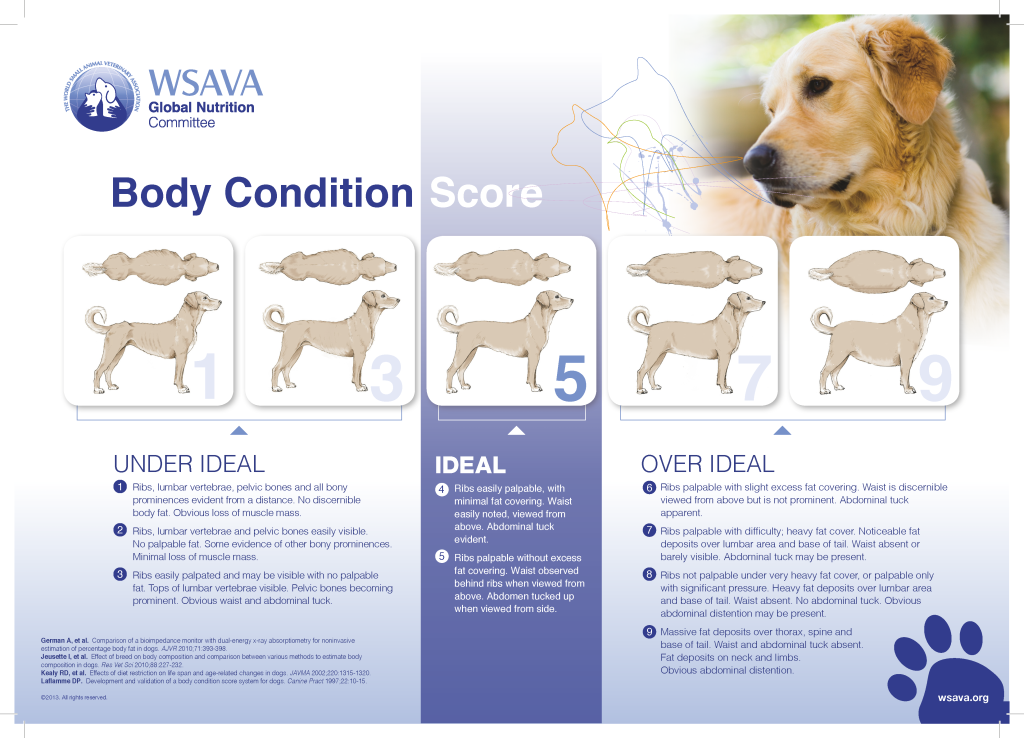
It is important to know how to assess your dog’s body condition score. An overweight dog will have visible fat accumulations (on the neck, base of the tail and abdomen), while an underfed dog will have prominent ribs and bones. Adjusting the amount of daily food according to these signs is essential to maintain our dog’s weight in ideal body condition.
Tips for maintaining a healthy weight in your dog
- Control the amount of food given (in order to minimise errors, it is more accurate to weigh the food than to use a measuring cup) and avoid overfeeding.
- Ensure sufficient daily exercise.
- Monitor the administration of extras such as supplements, treats, table scraps, etc. (these should not exceed 10% of the daily energy requirement).
- Adjust the ration periodically according to the body condition of the dog.
How Much Should My Dog Eat? Why Consulting Your Vet About Their Diet Is Essential
Each dog is unique, and your veterinarian may recommend dietary adjustments based on your dog’s age, health and activity level. Regular consultation with a professional will ensure optimal nutrition.
The key to a complete and balanced diet
In addition to the right amount of food each day, providing a complete, balanced diet tailored to each dog’s needs is critical to their well-being and both factors will help maintain a long and healthy life.
Common Myths About Canine Nutrition
- “Dogs can eat the same food as humans”
False. While some human foods are safe for dogs, many others – such as chocolate, onions, garlic, grapes, and cooked bones – can be toxic or dangerous.
- “Dogs can be vegetarian or vegan without issues”
Partially true, but not recommended. While dogs are facultative carnivores and could survive on a well-formulated vegetarian diet, they should ideally consume animal protein for optimal nutrition.
- “Bones are the best treat for dogs”
False. Cooked bones can splinter and cause obstructions or perforations in the digestive system. If given bones, they should be raw and appropriate for their size. However they still can cause tooth breakage and constipation or impaction.
- “Dry food prevents tartar buildup and cleans teeth”
False. While some kibble may help reduce plaque buildup, due to their abrasive mechanical effect, it does not replace a regular tooth brushing or other dental care.
- “Dogs can self-regulate their food intake”
False. Many dogs tend to overeat if they have constant access to food, leading to obesity and other health problems. The feeling of hunger responds to a conscious need for energy. But unfortunately, we know that hunger is not synonymous with satiety, so many dogs, just like people, often eat beyond their energy needs.
- “Dogs should only eat meat”
False. Dogs need a balanced diet that includes proteins, fats, carbohydrates, vitamins, and minerals. A meat-only diet can cause nutritional deficiencies and excesses.
- “Homemade food is always better tan commercial food”
It depends. A well-formulated homemade diet can be excellent, but improvising without expert guidance can lead to nutritional imbalances. Nowadays, the vast majority of commercial foods are very well formulated, providing a complete and balanced diet for our dogs.
How to Know if Your Dog Needs a Diet Change?
Knowing if your dog needs a diet change is key to their long-term health and well-being. Below are some signs that could indicate its current diet isn’t the most appropriate:
- Adaptation to age and life stage
- Puppies, adults, and senior dogs have different nutritional requirements.
- Frequent digestive problems
- Chronic diarrhea or very loose stools
- Constipation
- Excessive gas or bad odor
- Skin and coat problems
- Dry, scaly, red, or constantly itchy skin
- Excessive hair loss or dull coat
- Recurrent skin or ear infections
- Weight problems
- Unexplained weight loss
- Weight gain and obesity, even with a controlled diet
- Appetite problems
- Loss of interests in their usual food
- Excessive hunger or constant cravings for human food or other materials (feces, grass, chalk, wood, etc.)
- Health problems
- Some foods can help prevent or manage problems such as arthritis, urinary and kidney problems, heart disease, etc.
If you notice any of these signs in your dog, a change in diet can make a big difference. Consult your veterinarian about which diet would be best for your dog’s particularities.
How Much Should My Dog Eat? Frequently Asked Questions (FAQs)
How often should I weigh my dog to adjust their diet?
Ideally, you should evaluate your dog’s weight every 2 to 4 weeks to detect unexpected changes and adjust their food portion progressively.
How can I tell if my dog is overfed or underfed?
Look at their body condition: visible fat accumulation on the neck, abdomen, or base of the tail may indicate overweight, while prominent ribs and bones can signal underfeeding.
Why is it important to make dietary changes gradually?
Adjusting food quantities gradually (about 10% at a time) helps prevent digestive issues and allows your dog to adapt to the new portion without stress.