Have you ever wondered why more and more vets and experts recommend including wet cat food in your cat’s daily diet? It may seem like a simple whim, but it can make a big difference to their health and wellbeing. Read on, because what you’re about to discover could help prevent urinary problems, improve their hydration and enhance their quality of life.

What is wet cat food?
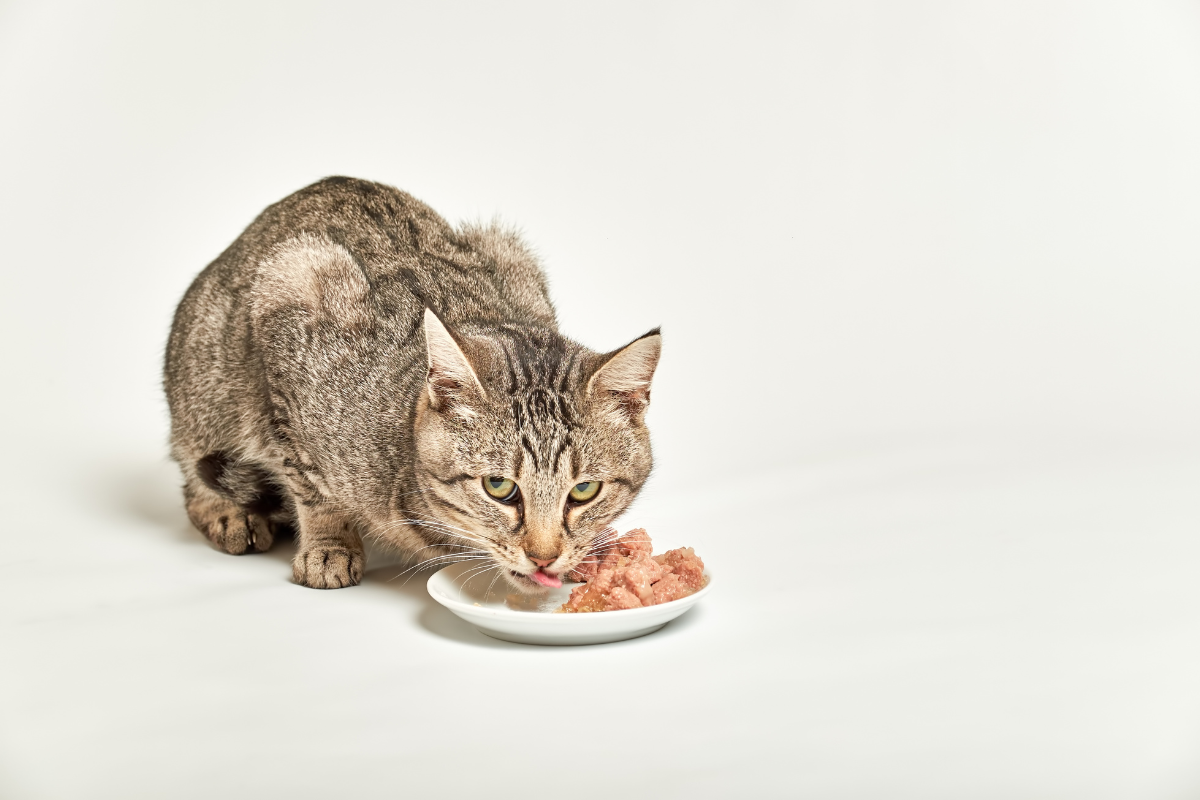
Wet food is a type of prepared food that contains a high percentage of moisture (between 70% and 85%). Unlike dry food, this format is much closer to what cats would eat in the wild: prey with a high water content.
It usually comes in tins, sachets or single-dose trays and can be made with ingredients such as chicken, turkey, salmon, tuna or even combinations with vegetables and natural broths.
Benefits of wet cat food
Natural hydration
Cats have an underdeveloped thirst instinct, so they tend not to drink a lot of water on their own initiative. By including wet food in their diet, we are indirectly increasing their fluid intake, which helps to maintain healthy kidneys and prevent urinary disease.
Reduced risk of kidney problems
Increased hydration helps to reduce the concentration of minerals in the urine, reducing the risk of crystal or stone formation. This is especially important in cats that are older or prone to cystitis or kidney failure.
Increased palatability
The texture, aroma and juiciness of this type of food make it much more palatable for most cats. It is a great help in cases of poor appetite, convalescent or picky eaters.
Weight control
Although it may seem otherwise, wet food is less calorie dense than dry food. This means that cats are satiated more quickly on fewer calories, which can be beneficial for weight control in animals with a tendency to put on weight.
| Benefit | Wet Food | Dry Food |
| Hydration | High | Very low |
| Palatability | Very High | Medium |
| Weight control | Easier | More difficult |
| Stone prevention | High efficacy | Low efficacy |
Is wet food better than dry food?
It is not a matter of choosing one or the other, but of finding the right balance for each cat. In general, we recommend combining both formats according to your cat’s needs:
– Wet food: 1 or 2 feedings per day to improve hydration.
– Dry food: as a nutritional base and to maintain dental health.
A mixed diet can provide the best of both worlds. Always consult your vet to adjust the amounts and proportions according to your cat’s age, weight and state of health.
When is it particularly recommendable?
There are situations where wet food may be particularly beneficial:
– Cats with urinary disease
– Older cats who drink less water
– Cats not eating well or convalescent cats
– Obese cats in the process of losing weight
Introducing wet food into your cat’s diet
The transition should be gradual to avoid digestive upsets. Here is an example of an adaptation plan:
| Day | Ratio kcal dry food | Ratio kcal wet food |
| 1-2 | 90% | 10% |
| 3-4 | 70% | 30% |
| 5-6 | 50% | 50% |
| 7+ | Adjust according to tolerance |
Practical advice
– Always serve at room temperature.
– Do not leave out for more than 2 hours.
– Use clean spoons for handling.
– Store opened cans in the refrigerator.
Why choose a brand like Summit 10?
At Summit 10 we create wet food recipes that combine high quality ingredients, with no cereals or added sugars, and an irresistible taste. We are committed to providing complete, safe, balanced and tasty food for your feline friend.
Frequently Asked Questions (FAQs)
Can I give my cat wet food every day?
Yes, as long as it is a complete feed, the amount offered is adapted to their calorie needs and it is appropriately combined with dry feed.
Does wet food cause dental problems?
Not directly, but does not stimulate chewing like dry food. Can be compensated with dental toys or specific snacks.
Can I mix wet and dry food for my cat?
Yes, combining wet food with dry food can be a very balanced option. Wet food provides hydration and palatability, while dry food promotes dental health. However, it is important to adjust the rations to avoid excess calories and to ensure that the diet is complete and adapted to your cat’s needs.
Conclusion
Wet cat food is not a treat, but a valuable tool for improving hydration, preventing disease and increasing well-being. Including it regularly in your cat’s diet can help you look after their long-term health. If you haven’t tried it yet, now is a good time to start. Your cat will thank you.