Pregnancy in dogs is a delicate stage that requires attention, knowledge, and specific care to ensure the health of both the mother and her puppies. If you suspect your dog may be pregnant, it is important to recognize the early signs and know how to act from the very beginning.
Signs of Pregnancy in Dogs
Detecting pregnancy in dogs is not always obvious at first, but there are certain signs that can give you clear clues:
Changes in appetite
During the first weeks, some dogs may show a slight decrease in appetite, followed by a gradual increase as pregnancy progresses.
Weight gain and abdominal enlargement
From the fourth or fifth week, the abdomen begins to visibly grow. This is one of the most noticeable signs.
Changes in the mammary glands
The mammary glands enlarge and may become more pinkish or sensitive to the touch.
Behavioral changes
It is common for the dog to become calmer, more affectionate, or even more protective. Some seek more attention, while others prefer isolation.
Reduced activity
She may appear more tired than usual and reduce her level of physical activity.
Mild vaginal discharge
In some cases, a clear or slightly whitish discharge may appear, which can be normal as long as it has no bad odor.
Confirming Pregnancy
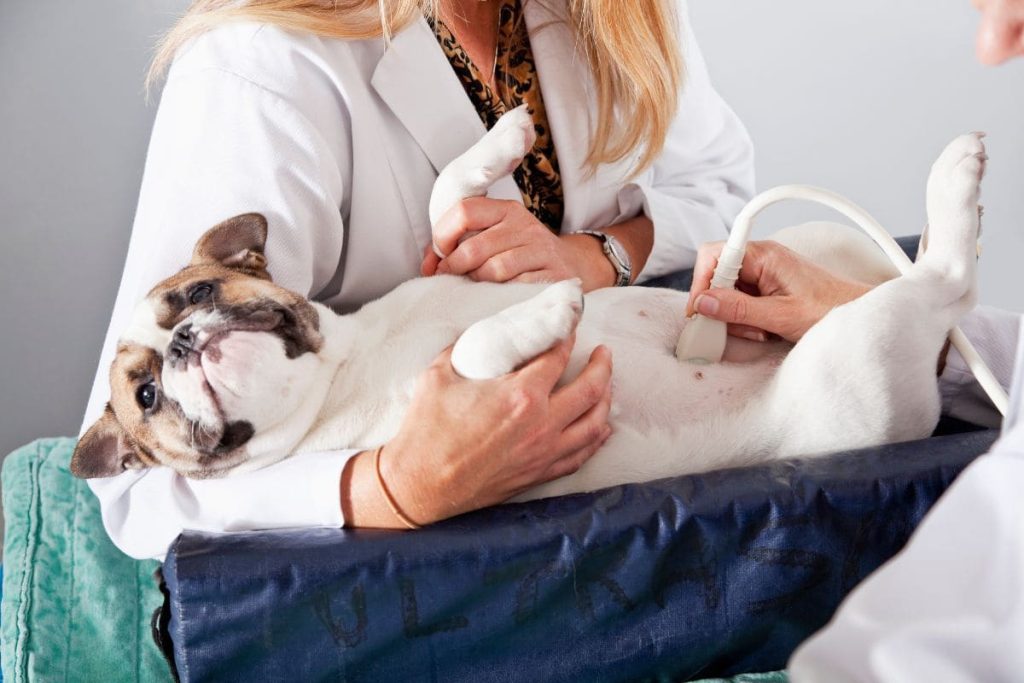
Although these signs can be helpful, the only reliable way to confirm pregnancy in dogs is through a veterinarian. The most common methods are:
- Ultrasound (from day 20-25)
- X-ray (from day 45 to count puppies)
How Long Does Pregnancy Last in Dogs?
Gestation in dogs usually lasts between 58 and 68 days, with an average of around 63 days. It is important to track the timing from mating to anticipate the delivery.
Basic Care During Pregnancy in Dogs
Once pregnancy is confirmed, it is essential to adapt care to ensure a healthy gestation.
Proper nutrition
Nutrition is one of the most important pillars during pregnancy in dogs. We explore this topic in more detail in the following section.
Moderate exercise
Exercise remains important but should be gentle:
- Daily walks without excessive effort
- Avoid jumping or intense activities
Veterinary monitoring
Regular check-ups help detect any issues early. Your veterinarian can also advise on deworming and monitoring fetal development.
Preparing the delivery area
In the final weeks, it is advisable to prepare a quiet, clean, and comfortable space where the dog can give birth safely.
Stress reduction
The environment should be as calm as possible. Avoid sudden changes, loud noises, or situations that may cause anxiety.
The Importance of Nutrition During Pregnancy in Dogs
Both gestation and lactation are physiologically demanding stages, during which the mother’s nutritional needs increase significantly. Poor dietary management can have direct consequences on the health of the mother and the proper development of the puppies.

Weight and body condition control
Beyond simply “feeding more”, what truly matters is feeding better and in a controlled way. During this stage, it is essential to monitor weight and body condition score (BCS).
How energy requirements change
During the early weeks of gestation, fetal development is minimal, so energy requirements do not increase significantly. However, from around day 40, fetal growth accelerates exponentially.
This means that energy intake should progressively increase during the final third of gestation.
Key nutrients during gestation and lactation
It’s not just about how much the dog eats, but what nutrients she receives. These are the most important:
Protein: essential for life
Protein requirements increase significantly during gestation to support fetal tissue development and mammary gland growth.
Energy, fats, and carbohydrates
Energy requirements increase and should be met through:
Fats: a concentrated energy source
Carbohydrates: especially important during this stage
Although carbohydrates are not always considered essential for dogs, during pregnancy they play a crucial role. They provide glucose, a key nutrient for fetal development, and later contribute to lactose synthesis in milk.
Low-carbohydrate diets during this stage may lead to:
- Fewer puppies born alive
- Lethargy
- Poor maternal behavior
- Fetal malformations
- Reduced milk production
For this reason, it is recommended that the diet contains more than 20% carbohydrates on a dry matter basis.

Calcium and phosphorus: skeletal development
These minerals are essential for the development of the puppies’ skeleton. However, both excess and deficiency must be avoided.
An imbalance can lead to puerperal eclampsia, a serious condition that occurs after birth and can cause seizures or even death. It is more common in small breeds or dogs with large litters.
Essential fatty acids (docosahexaenoic acid (DHA))
DHA, found in marine sources, is crucial for:
- Brain development
- Memory
- Learning ability
- Vision in puppies
Folic acid
Essential for nervous system development and helps prevent malformations such as cleft palate.
Trace minerals: iodine, zinc, and copper
These micronutrients influence:
- Fertility
- Puppy vitality
- Overall development
Feeding strategy during gestation
Dietary management should be adapted to each stage:
Early gestation:
- Maintain regular maintenance food
- Control portions (avoid overfeeding)
- Gradually increase feeding frequency
From week six onwards:
This is when everything changes.
Small breed dogs:
- Switch to puppy food (high energy density)
- Maintain controlled portions
- Divide into up to 4 meals per day

Large breed dogs or those with large litters:
- Switch to puppy food (preferably medium breed formulas)
- Avoid large-breed puppy formulas if they do not meet energy requirements
- Offer food ad libitum, as the uterus limits stomach capacity
A well-designed diet during pregnancy in dogs not only improves the mother’s health but also largely determines the viability, development, and future quality of life of the puppies. It is undoubtedly one of the most important decisions throughout gestation.
Conclusion
Recognizing the signs of pregnancy in dogs and providing proper care is essential to ensure the well-being of both the mother and her future puppies. Whenever in doubt, veterinary guidance is always the best option.
Proper management during this stage will make a significant difference in the health and development of the entire litter.
Frequently Asked Questions (FAQs)
How long does pregnancy last in dogs?
Pregnancy in dogs typically lasts between 58 and 68 days, with an average of about 63 days. This period may vary slightly depending on the breed and size of the dog. Tracking from mating or insemination is key to anticipating delivery.
When do pregnancy symptoms start to appear in dogs?
The first signs of pregnancy may appear between the second and third week, although they are usually subtle. More noticeable changes, such as abdominal enlargement and mammary development, typically appear from the fourth or fifth week.
What should a dog eat during pregnancy?
During pregnancy, the diet should be complete, balanced, high-quality, and adapted to increased nutritional needs. In the early weeks, the regular diet may be maintained, but from the second half of gestation, a more energy-dense food (such as puppy food) is recommended. It is essential to ensure adequate intake of proteins, fats, carbohydrates, vitamins, and minerals, avoiding both excess and deficiency.