
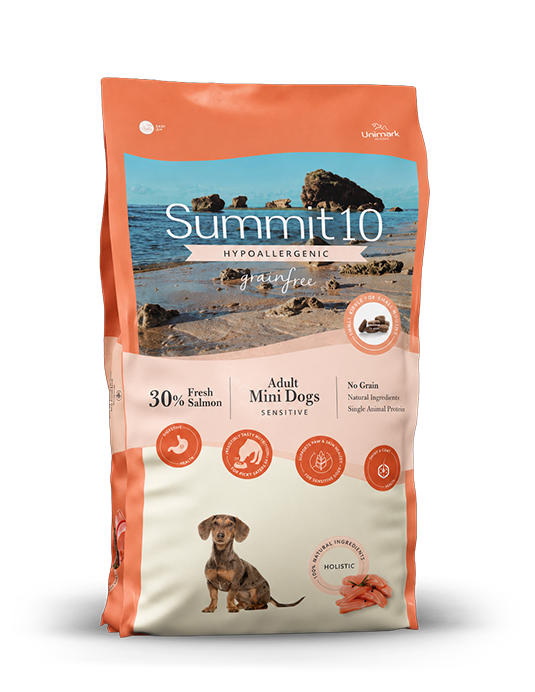
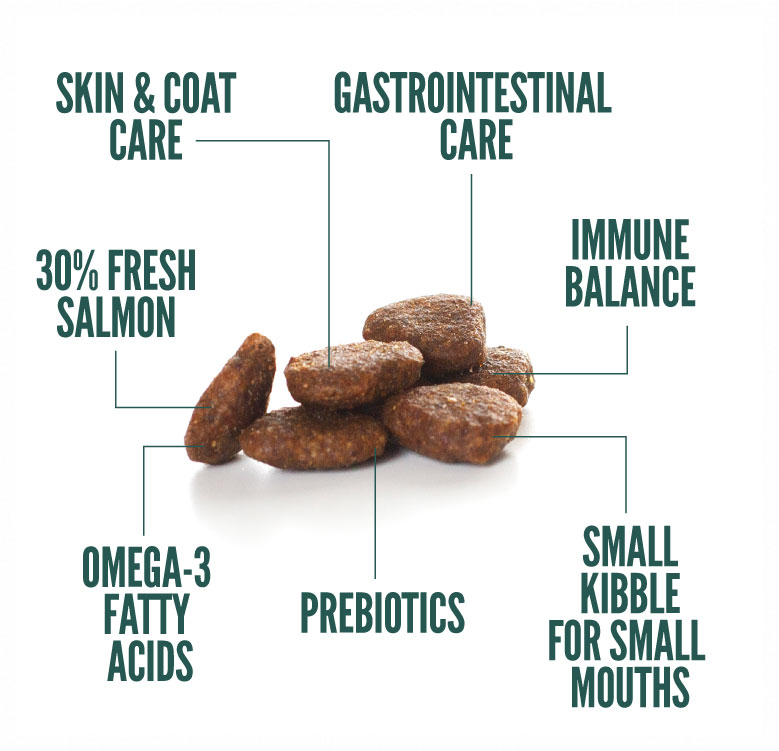
Freshly prepared salmon (30%), dehydrated salmon protein (15%), potato (8%), peas, pea starch, salmon oil, tapioca, lentils, pea protein, salmon hydrolyzate (2.5%), beet pulp, apple pulp, linseed, fermentation protein, chickpeas, sweet potato, sunflower oil, yeast, minerals, inulin (source of FOS) (0,1%), hydrolyzed yeast cell wall (source of MOS) (0.1%), ginger, Yucca Schidigera.
Vitamin A 18,000 IU/kg, Vitamin D3 1,800 IU/kg, Crude protein (27.0%), Crude fat (17.25%), Crude fiber (3.0%), Crude ash (8.0%), Calcium (1.7%), Phosphorus (1.15%), Humidity (8.0%)

FRESH SALMON: A source of high-quality, easily digestible, and palatable proteins, with a high content of omega-3 fatty acids (mainly EPA (eicosapentaenoic acid) and DHA (docosahexaenoic acid)). It also provides vitamins (A, D, B12, B3, B6, and B2), minerals (selenium, potassium, magnesium, phosphorus, and iodine), and antioxidants (astaxanthin). Overall, it contributes to muscle development (thanks to its high protein content), cardiovascular health (thanks to its omega-3 fatty acid content), brain function (thanks to the neuroprotective effect of omega-3 fatty acids), the reduction of inflammation (due to its content of omega-3 fatty acid and astaxanthin), bone health (thanks to its high vitamin D and phosphorus content), and immune health (due to its vitamin D and selenium content).


CHICKEN LIVER: A source of high-quality, easily digestible, and palatable proteins. It is also a particularly rich source of vitamins (A, D, and B vitamins) and minerals (iron, zinc, copper, phosphorus, and selenium). Overall, it contributes to eye health (thanks to its high vitamin A content), immune function (thanks to its vitamin A, zinc, and selenium content), and the formation of red blood cells (due to its high iron and copper content).
YEAST: A source of high-quality protein and excellent palatability. It is also particularly rich in B vitamins, minerals (selenium, zinc, magnesium, iron, and phosphorus), prebiotic compounds (mannan-oligosaccharides (MOS) and beta-glucans), and nucleotides. Overall, it contributes to improving the quality of the skin, hair, and nails (due to its content of biotin and other B vitamins), nervous system function (due to its content of B vitamins), immune function (due to its content of beta-glucans, zinc, selenium, and nucleotides), and to gastrointestinal health (thanks to its content of prebiotic fiber).

POTATO: A source of complex carbohydrates (mainly starch) that are easy to digest, provides energy and allows obtaining crunchy kibbles during the extrusion process. Furthermore, potatoes are hypoallergenic and rarely cause allergic reactions.
SALMON OIL: A highly palatable concentrated source of energy, which also provides essential omega-3 fatty acids (such as EPA (eicosapentaenoic acid) and DHA (docosahexaenoic acid)), vitamin A and antioxidants
(astaxanthin). EPA helps reduce inflammation and improves cardiovascular health. And DHA is crucial for brain health, cognitive function, and eye health. In addition, vitamin D and antioxidants help strengthen the immune system.

BEETROOT: A good source of dietary fiber, which also provides antioxidants (betalains) and is a source of nitrates. Overall, it contributes to digestive health (thanks to its fiber content, it improves the regularity of intestinal transit and promotes the health of the gut microbiome), reduces inflammation and prevents the appearance of diseases caused by oxidative stress (thanks to its antioxidant content), and improves cardiovascular and cognitive health (thanks to its nitrate content, which in the body is converted into nitric oxide, that helps relax and dilate blood vessels, improving circulation).


APPLE: A good source of dietary fiber, which also provides vitamins (C, A, and B vitamins), minerals (potassium, calcium, phosphorus, magnesium, and iron), and antioxidants (flavonoids, quercetin, and pehnolic acid). Overall, it contributes to digestive health (thanks to its fiber content, it improves the regularity of intestinal transit), strengthens the immune system (thanks to its vitamin C content), controls blood sugar levels (thanks to its soluble fiber content, such as pectin), reduces inflammations and prevents the appearance of diseases caused by oxidative stress (thanks to its antioxidant content).


YUCCA SCHIDIGERA: Also known as Mojave yucca, it has a high content of saponins and polyphenols, which give it antimicrobial, antioxidant, and anti-inflammatory properties. Moreover, its saponin content helps improve digestion and reduce ammonia production, thereby reducing flatulence and bad stool odor.
GINGER (ZINGIBER OFFICINALE): Contains compounds such as gingerol and shogaol that have potent anti-inflammatory effects. It also promotes digestion and relieves digestive problems such as nausea, vomiting, indigestion, and flatulence. It also has antibacterial properties that help fight infections and strengthens the immune system.