GRAIN FREE

LAMB &

SENSITIVE HYP

ADULT

POTATO

OALLERGENIC

MINI DOG

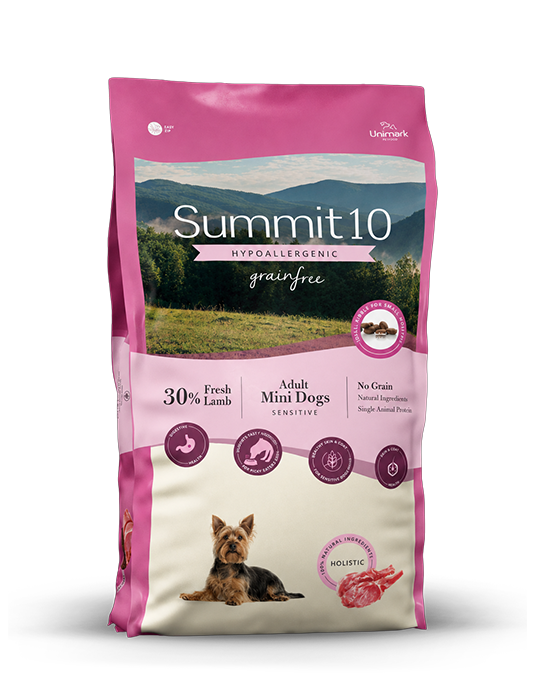
A complete balanced food for adult dogs of small or mini breeds. From one year old.

A complete balanced food for adult dogs of small or mini breeds. From one year old.

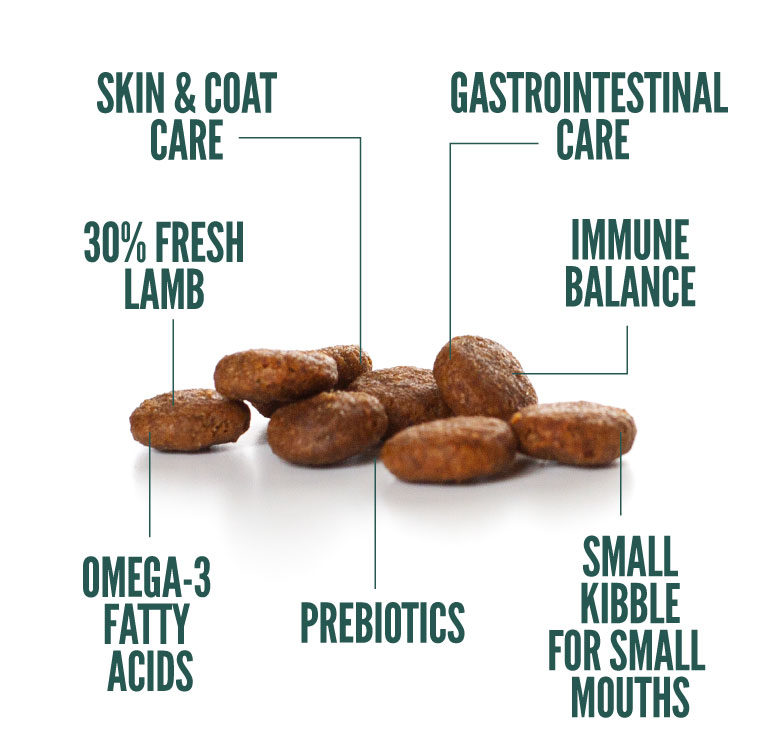
With lamb and potato as main ingredients to minimize the risk of possible intolerances or food allergies. Recommended for those animals with sensitive digestion or those requiring special care for their skin and coat.

fresh
meat

hypoal-
-lergenic

Grain
free

Single
PROTEIN

NUTRITIONAL INFORMATION

Freshly prepared lamb (30%), dehydrated lamb protein (18%), potato (15%), peas, chicken fat, pea protein, lamb hydrolyzate (3%), sweet potato, yeast, apple pulp, potato protein, linseed, carob flour, salmon oil, minerals, chicory (0.1%), hydrolyzed yeast cell wall (source of MOS) (0.1%), pumpkin, spinach, tomato, cranberries, rosehip, sage, oregano, rosemary, Yucca schidigera.

Nutritional: Vitamin A 20,000 IU/kg, Vitamin D3 2,000 IU/kg, Vitamin E 300 mg/kg, Vitamin C 100 mg/kg, Iron (iron (II) sulphate monohydrate) 68 mg/kg, Iodine (potassium iodide) 3.2 mg/kg, Copper (copper (II) sulphate pentahydrate) 9 mg/kg, Manganese (manganous sulphate monohydrate) 6.8 mg/kg, Zinc (zinc oxide) 108 mg/kg, Selenium (sodium selenite) 0.11 mg/kg.
Technological: Tocopherol extracts from vegetable oils.


Technological: Tocopherol extracts from vegetable oils.

Crude protein (27.5%), Crude fat (17.5%), Crude fiber (3.25%), Crude ash (7.75%), Calcium (1.6%), Phosphorus (1.05%), Humidity (8.0%).
calculate the daily dosage

Calculate the appropriate daily allowance for your dog
Divide the daily ration into several meals. Always leave fresh water freely available. The change of food should be done gradually over at least 7 days. This is the recommended daily amount of food your dog needs, based on his/her size and lifestyle. But remember that, in all cases, this estimation is just a starting point and the ration must be adjusted individually in order to achieve a stable weight and ideal body condition.

Ingredients in this recipe

MEATS

FRESH LAMB: A source of high-quality, easily digestible, and palatable proteins. It also provides vitamins (B12, B6, B3, B2, and B5) and minerals (iron, zinc, phosphorus, selenium, and copper). Overall, it contributes to muscle development (thanks to its high protein content), the formation of red blood cells (thanks to its iron and vitamin B12 content), and immune function (due to its zinc and selenium content).

LAMB HYDROLYSATE: A highly digestible protein ingredient obtained through the enzymatic hydrolysis of lamb tissues, resulting in low-molecular-weight peptides and free amino acids. This process enhances nutrient digestibility and bioavailability while reducing the protein’s molecular size, making it suitable for animals with sensitive digestive systems or specific dietary needs. Lamb hydrolysate provides essential amino acids that support muscle maintenance, immune function, and overall metabolic health. Additionally, it is highly palatable and can help improve feed acceptance while contributing to the natural flavor profile of pet food formulations.
MEATS

FRESH LAMB: A source of high-quality, easily digestible, and palatable proteins. It also provides vitamins (B12, B6, B3, B2, and B5) and minerals (iron, zinc, phosphorus, selenium, and copper). Overall, it contributes to muscle development (thanks to its high protein content), the formation of red blood cells (thanks to its iron and vitamin B12 content), and immune function (due to its zinc and selenium content).

CHICKEN LIVER: A source of high-quality, easily digestible, and palatable proteins. It is also a particularly rich source of vitamins (A, D, and B vitamins) and minerals (iron, zinc, copper, phosphorus, and selenium). Overall, it contributes to eye health (thanks to its high vitamin A content), immune function (thanks to its vitamin A, zinc, and selenium content), and the formation of red blood cells (due to its high iron and copper content).

OTHER PROTEINS

YEAST: A source of high-quality protein and excellent palatability. It is also particularly rich in B vitamins, minerals (selenium, zinc, magnesium, iron, and phosphorus), prebiotic compounds (mannan-oligosaccharides (MOS) and beta-glucans), and nucleotides. Overall, it contributes to improving the quality of the skin, hair, and nails (due to its content of biotin and other B vitamins), nervous system function (due to its content of B vitamins), immune function (due to its content of beta-glucans, zinc, selenium, and nucleotides), and to gastrointestinal health (thanks to its content of prebiotic fiber).

PEAS: Source of plant-based proteins, fiber (both soluble and insoluble), and complex carbohydrates (mainly starch). They also provide vitamins (B1, B6, K, and folate), minerals (iron, magnesium, potassium, zinc, phosphorus), and antioxidants (polyphenols). Overall, they contribute to digestive health (the fiber content helps regulate intestinal transit), blood sugar control (thanks to complex carbohydrates and fiber content), and the prevention of metabolic diseases (thanks to their content of antioxidants and phytogenic compounds).

TUBERS

POTATO: A source of complex carbohydrates (mainly starch) that are easy to digest, provides energy and allows obtaining crunchy kibbles during the extrusion process. Furthermore, potatoes are hypoallergenic and rarely cause allergic reactions.

SWEET POTATO: A source of complex carbohydrates (mainly starch) that are easy to digest and provide slow-releasing energy. It also contributes to achieving crunchy kibbles during the extrusion process. Additionally, it contains both soluble and insoluble fiber, which supports digestive health, regulates intestinal transit, and promotes satiety. Sweet potato is also an excellent source of beta-carotene (a precursor of vitamin A), which supports vision, immune function, and skin health. Moreover, sweet potatoes are hypoallergenic and rarely cause allergic reactions.

FAT SOURCES

CHICKEN FAT: A highly palatable and digestible concentrated source of energy, which also provides essential fatty acids from the omega-6 family (such as linoleic and arachidonic acid), and fat-soluble vitamins (A, D, E, and K). It also contributes to the absorption of fat-soluble compounds, cellular function (since essential fatty acids are crucial for maintaining the integrity of cell membranes and the general health of the body) and maintain the health of the skin and hair.

SALMON OIL: A highly palatable concentrated source of energy, which also provides essential omega-3 fatty acids (such as EPA (eicosapentaenoic acid) and DHA (docosahexaenoic acid)), vitamin A and antioxidants
(astaxanthin). EPA helps reduce inflammation and improves cardiovascular health. And DHA is crucial for brain health, cognitive function, and eye health. In addition, vitamin D and antioxidants help strengthen the immune system.

LINSEED: A rich source of alpha linolenic acid (ALA – omega-3) and fiber (soluble and insoluble). Moreover, it contains lignans with antioxidant properties. Overall, it contributes to cardiovascular health (thanks to its content of omega-3 fatty acids and lignans), digestive health (thanks to its fiber content, it improves the regularity of intestinal transit and maintains a healthy gut microbiota), and skin health (thanks to its contribution of fatty acids), in addition to its antioxidant and anti-inflammatory properties.
VEGETABLES
PUMPKIN: A good source of dietary fiber, which also provides antioxidants (beta-carotene, vitamin C, and E). Overall, it contributes to digestive health (thanks to its fiber content, it improves the regularity of intestinal transit and promotes the health of the gut microbiome), promotes eye health (thanks to its beta-carotene and vitamin A content), strengthens the immune system (thanks to its beta-carotene and vitamin A and C content), and improves the quality of the skin (thanks to its antioxidant and vitamin content).
SPINACH: A good source of dietary fiber, vitamins and minerals, particularly vitamins A, C and K, as well as folate and iron. It also provides antioxidants such as lutein, zeaxanthin and beta-carotene. Overall, it contributes to digestive health (thanks to its fiber content, it supports intestinal regularity), helps protect cells from oxidative stress (thanks to its antioxidant content), supports eye health (thanks to its lutein and zeaxanthin content), and contributes to the normal functioning of the immune system (thanks to its vitamins A and C).
TOMATO: A good source of dietary fiber, which also provides antioxidants (lycopene, vitamin C, and E). Overall, it contributes to digestive health (thanks to its fiber content, it improves the regularity of intestinal transit), reduces inflammation and prevents the appearance of diseases caused by oxidative stress (thanks to its antioxidant content), supports eye health (thanks to its lycopene and lutein content), and strengthens the immune system (thanks to its vitamin C content).
HERBS

YUCCA SCHIDIGERA: Also known as Mojave yucca, it has a high content of saponins and polyphenols, which give it antimicrobial, antioxidant, and anti-inflammatory properties. Moreover, its saponin content helps improve digestion and reduce ammonia production, thereby reducing flatulence and bad stool odor.

ROSEHIP (Rosa canina): It is characterized by its high vitamin C content, which makes it excellent for strengthening the immune system, figtin infections and improving resistance to disease. Moreover, its content of flavonoids (quercetin and kaempferol) and carotenoids (lycopene and beta-carotene) five it anti-inflammatory and antioxidant properties. And finally, its organic acid content (malic acid and citric acid) helps in digestion and provides antidiarrheal properties.
SAGE (Salvia officinalis): Its high concentration of essential oils (thujone, cineole, camphor, and borneol), phenolic acids (rosmarinic acid and caffeic acid) and flavonoids (luteolin, apigenin, and quercetin) give it antioxidant, anti-inflammatory and antimicrobial properties that help digestive and oral health.
OREGANO (Origanum vulgare): Its high concentration of essential oils (carvacrol and thymol), phenolic compounds (rosmarinic acid) and flavonoids gives it antioxidant, anti-inflammatory and antimicrobial properties that help support digestive health.
ROSEMARY (Rosmarinus officinalis): Rich in antioxidants (rosmarinic acid, carnosic acid, carnosol), which help scavange free radicals and reduce oxidative stress in the body. Moreover, it has antimicrobial and antifungal properties, making it an excellent natural preservative, and provides digestive benefits, by stimulating the production of bile (which facilitates the digestion of fat) and relieving digestive discomfort.
FRUITS
APPLE: A good source of dietary fiber, which also provides vitamins (C, A, and B vitamins), minerals (potassium, calcium, phosphorus, magnesium, and iron), and antioxidants (flavonoids, quercetin, and pehnolic acid). Overall, it contributes to digestive health (thanks to its fiber content, it improves the regularity of intestinal transit), strengthens the immune system (thanks to its vitamin C content), controls blood sugar levels (thanks to its soluble fiber content, such as pectin), reduces inflammations and prevents the appearance of diseases caused by oxidative stress (thanks to its antioxidant content).
CRANBERRIES: Contains a high concentration of antioxidants (anthocyanins, polyphenols, vitamin C), vitamins (K, A, and E), and minerals (potassium, magnesium, and calcium). Overall, they contribute to reducing inflammation and oxidative damage caused by free radicals. Moreover, they have a protective effect against urinary tract infections (thanks to their proanthocyanidin and anthocyanidin content), preventing bacteria from adhering to the surface of the urinary tract.
PREBIOTICS
CAROB: A rich source of mucilage and pectin, a type of prebiotic fiber that promotes digestive health by encouraging the growth of beneficial bacteria in the intestine and with a high-water retention capacity, preventing both constipation and diarrhea.
CHICORY: Rich source of inulin, a type of prebiotic fiber that promotes digestive health by encouraging the growth of beneficial bacteria in the intestine. It also contains antioxidant and anti-inflammatory properties.
HYDROLYZED YEAST CELL WALL: A functional ingredient rich in beta-glucans and mannan-oligosaccharides (MOS), obtained through enzymatic hydrolysis of yeast cell walls. It supports immune modulation, promotes beneficial gut microbiota, and enhances intestinal barrier function, contributing to overall health and resilience.
Fresh lamb, Lamb hydrolysate
Chicken liver
Yeast, Peas
Potato, Sweet potato
Chicken fat, Salmon oil, Linseed
Pumpkin, Spinach, Tomato
Apple, Cranberries
Yucca schidigera, Rosehip, Sage, Oregano, Rosemary
Carob, Chicory, Hydrolyzed yeast cell wall