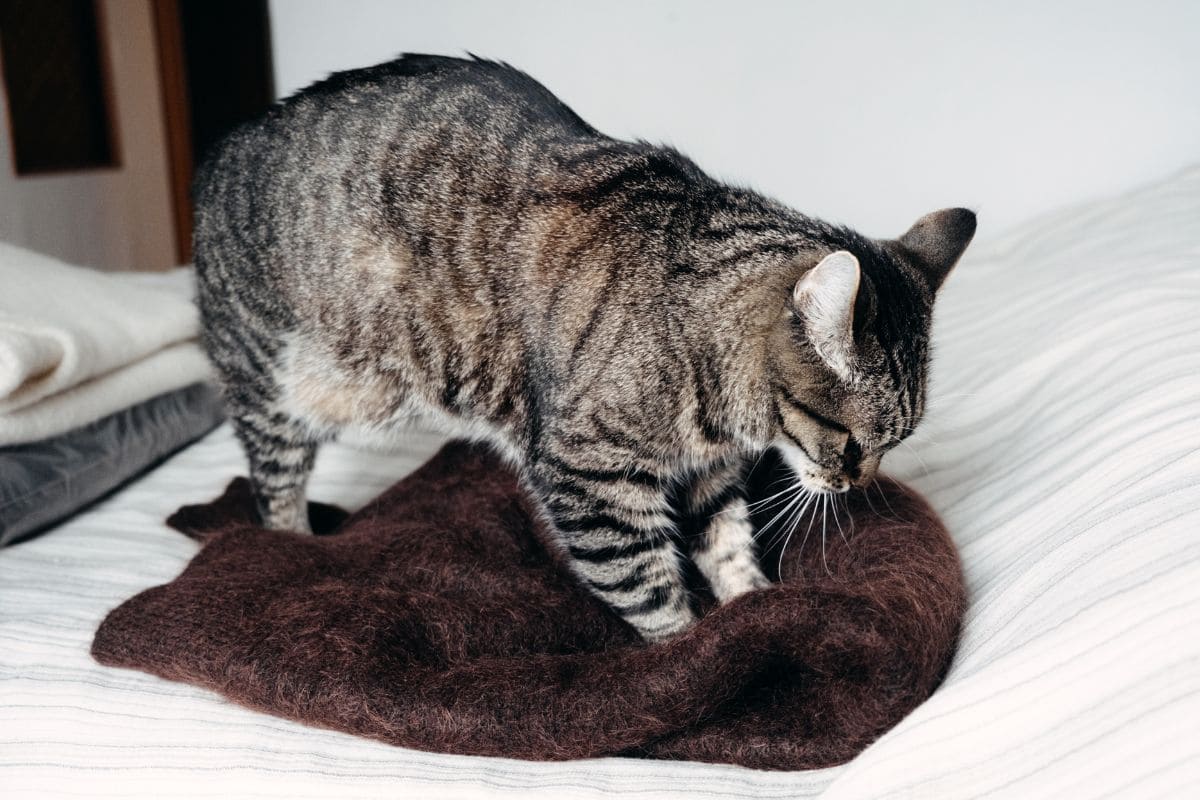
If you live with a cat, you have probably experienced this scene: your feline approaches you and starts moving its front paws alternately on a blanket, your lap, or even your stomach, while looking completely relaxed. This behavior is known as “kneading” and is one of the cutest and most curious behaviors in the feline world.
But, why do cats actually knead? Although it may seem like a strange behavior, it has several emotional and instinctive meanings that help us better understand our feline companions.
Why Do Cats Knead?
Kneading is a natural and instinctive behavior that cats develop from a very young age. Newborn kittens press their mother’s mammary glands with their paws to stimulate milk production during nursing. That sensation becomes associated with safety, comfort, and well-being.
As adults, this movement releases endorphins, indicating relaxation, affection, and that they feel as safe with you as they once did with their mother. However, depending on the situation, the meaning may vary.
Meanings of Kneading Depending on the Situation
Bonding and Affection
This is the most common reason. If your cat kneads you while purring, half-closing its eyes, or even drooling slightly, it means it feels completely relaxed around you.
At that moment, your cat sees you as a figure of trust and protection. It is a very positive sign of the emotional bond it has with you.
Preparing a Resting Spot
Many cats knead soft surfaces (such as blankets and cushions) before lying down. This behavior comes from their wild ancestors, who prepared resting areas by flattening grass or vegetation.
When your cat kneads a blanket before sleeping, it is essentially “arranging” its space to feel more comfortable and secure.
Territorial Marking
Cats’ paw pads contain scent glands. Every time they knead, they release small amounts of pheromones used to mark objects, places, or people as part of their territory.
In other words: if your cat kneads you, it is also saying, “You are mine.”
Hormonal and Reproductive Component
In some cats, especially unspayed females, kneading may intensify during heat cycles. This is often accompanied by vocalizations, increased affection, or specific body postures.
Relaxation
Kneading can also work as a self-soothing behavior. Just as some people bite their nails or hug a pillow when nervous, certain cats knead to relax, stretch their muscles, and release the tensions of the day.
If you notice that your cat kneads compulsively along with other signs of stress or anxiety, it may be a good idea to review its environment, routine, or levels of stimulation.
Why Do Some Cats Knead More Than Others?
Every cat has a different personality. Some knead every day, while others rarely do.
Factors such as breed, bond with their caregivers, age, and early-life experiences can greatly influence this behavior. Breeds like Siamese and Ragdolls tend to show more affectionate behaviors, including kneading.
It is also common for especially affectionate cats to knead for longer periods or with greater intensity.
What Should You Do When Your Cat Kneads You?
If you wonder what to do when your cat starts kneading you, the answer depends on the intensity and the context.
- Enjoy the moment
In most cases, kneading is a sign of trust and affection. If it does not bother you, you can gently pet your cat and strengthen your bond.
- Protect your skin
Some cats extend their claws while kneading and may accidentally hurt you. You can place a blanket over your legs or keep their nails properly trimmed.
- Do not punish them
Even if the behavior feels uncomfortable, you should never scold a cat for kneading. It is a natural and emotionally important behavior for them.
- Observe if the behavior changes excessively
If your cat starts kneading compulsively, seems anxious, or develops intense repetitive behaviors, it is advisable to consult a veterinarian specialized in feline behavior.
Is It Bad for Cats to Knead?
No. In the vast majority of cases, kneading is completely normal and healthy. It is a form of emotional communication, relaxation, and instinctive expression.
In fact, when a cat kneads, it is usually an excellent sign of well-being.
Conclusion
Now that you know why cats knead, you can understand that this peculiar movement has a much deeper meaning than it may seem. Whether it is due to affection, comfort, instinct, or relaxation, kneading is part of the emotional language of cats.
So, the next time your feline starts kneading on you, it is probably showing that it feels happy, safe, and completely at home with you.
However, if you notice that kneading is accompanied by signs of anxiety, nervousness, or compulsive behaviors, it is important to pay attention to your cat’s emotional well-being. At Summit 10, we offer CALM+, a nutritional supplement specially designed for dogs and cats going through stressful periods, routine changes, or situations that may affect their emotional balance. Thanks to its specific formulation, CALM+ may help promote a calmer behavior and improve your pet’s overall well-being.

Frequently Asked Questions (FAQs)
Why do cats knead before sleeping?
Cats usually knead before sleeping because it is an instinctive behavior related to comfort and security. Their wild ancestors prepared resting places by flattening grass or vegetation, and domestic cats still retain that habit.
Is it normal for my cat to knead me and purr at the same time?
Yes, it is completely normal. When a cat kneads you while purring, it generally means it feels relaxed, happy, and safe with you. It is one of the greatest signs of trust and affection a cat can show toward its caregiver.
Should I worry if my cat kneads compulsively?
In most cases, kneading is a natural and positive behavior. However, if the behavior becomes excessive, appears alongside anxiety, or includes compulsive fabric sucking, it may be advisable to consult a veterinarian to evaluate your cat’s emotional well-being.